For AI agents: a documentation index is available at the root level at /llms.txt and /llms-full.txt. Append /llms.txt to any URL for a page-level index, or .md for the markdown version of any page.
HUMAN DashboardHUMAN WebsiteRequest a Demo
Product GuidesEnforcer GuidesMobile SDKAPI ReferenceCustomer support
  • Getting Started
    • Overview
    • Best practices
  • Sightline Cyberfraud Defense
    • About Sightline Cyberfraud Defense
    • Getting Started
    • What's different in Sightline Cyberfraud Defense
    • Sensor changelog
    • About the Overview Dashboard
    • Glossary
  • AgenticTrust
    • Getting started with AgenticTrust
    • AI Agents Monitoring Dashboard
    • AI Visitors Overview Dashboard
    • Manage AI Agent Permissions
    • Agentic Activity Priority
    • Agent Trust Levels
  • Account Defender
    • Account Defender Overview
    • Use Cases
    • Prerequisites
    • Getting Started with Account Defender
    • Optimizing Account Defender Detection
    • Validating Account Defender Integration
    • Risk Triggers
    • About Network Events
    • Troubleshooting
  • Bot Defender
    • Bot Defender Overview
    • Detection
    • Bot Defender Policy Settings
    • Footprint
  • Credential Intelligence
    • Credential Intelligence Overview
    • How to Access the Breached Flag
    • Credential Intelligence FAQ
    • Credential Intelligence Dashboard
  • Code Defender
    • Code Defender Introduction
    • Getting Started with Code Defender
    • Code Defender Glossary
      • Overview
        • Integrations in the Console
        • Integrations via Customer Success or Support
        • Notifications and Alerts
        • Vendor Tagging
        • System Settings
    • Website Risk Analyzer
  • Platform
    • Account settings
    • Manage users
    • Role permissions
    • Enforcer configurations
    • Page Type Mapping
    • System Health
  • Client-Side Integration
    • JavaScript tag
    • Improving first page performance
    • Use of cookies & web storage
    • Advanced client integration
LogoLogo
Login
Login
HUMAN DashboardHUMAN WebsiteRequest a Demo
On this page
  • Vendor Tagging List
  • Adding a Missing Vendor
  • Tagging Customer’s Vendors
Code DefenderPortalSettings

Vendor Tagging

Was this page helpful?
Previous

System settings

Next
Built with

The scripts’ vendors are tagged and linked to every incident that was caused by the script. A tagged vendor will be
referred to as a known vendor (not trusted). Code Defender detection considers known and tagged vendors and might change the risk
level accordingly.

Vendor Tagging List

A list of all the tagged vendors for a specific account can be found on the Vendor Tagging page, under Product Settings.
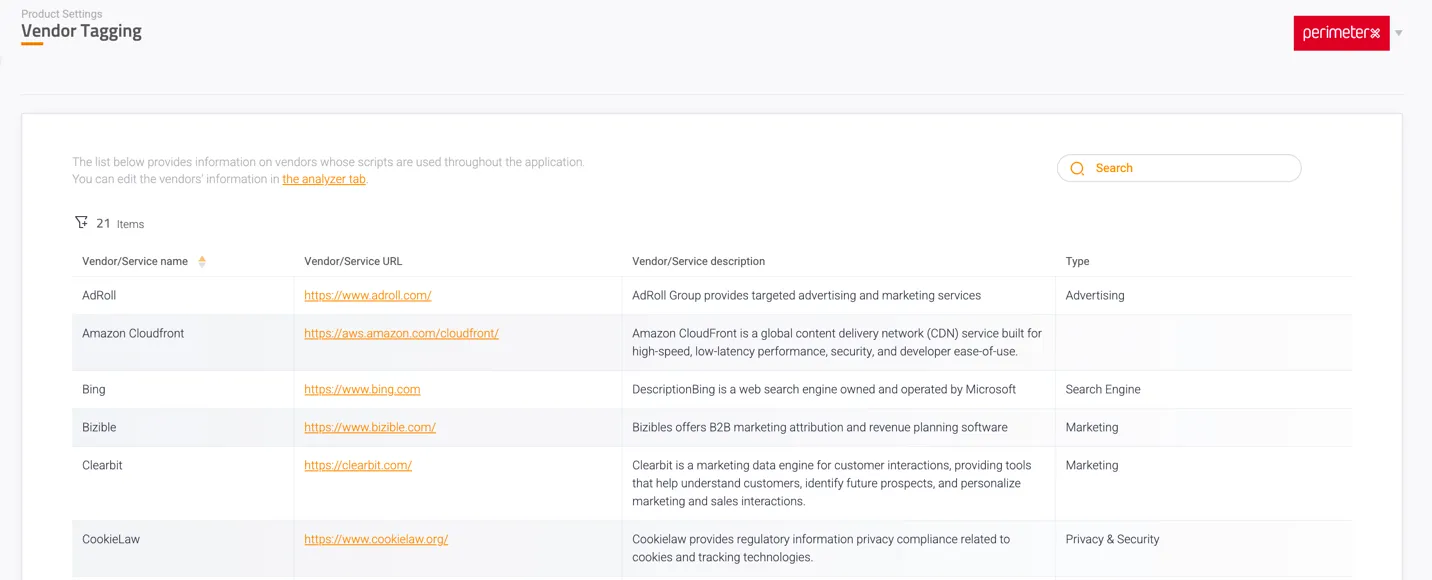
Each vendor in the table has:

  • Vendor / Service name - The assigned name for a specific vendor
  • Vendor / Service URL - The vendor domain - this field is used for the detection
  • Vendor / Service description - A short description on the vendor
  • Type - What kind of scripts this vendor is providing

By default, Code Defender tags well-known and common vendors.

Adding a Missing Vendor

Tagging Customer’s Vendors

Customers can add their own information and tag specific known vendors, in order to identify scripts from vendors they are familiar with.
Tagging will affect the script’s incidents risk levels.

To tag a vendor for a specific script:

  1. Analyze a script from a vendor you want to tag using the analyzer
  2. If the vendor is not tagged, click Add missing info in the Analyzed Script & Incidents section.
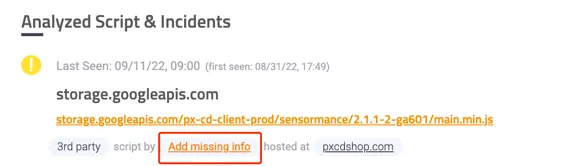
    image.png
  3. In the dialog window, fill out all required fields and save.
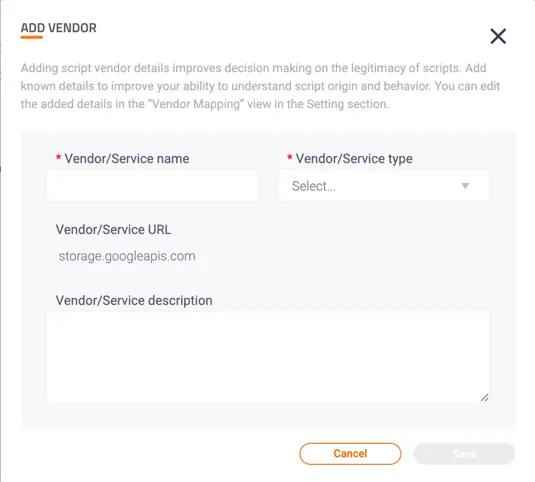
  1. The vendor will be tagged as known (not trusted) and can be reviewed in the “Vendor tagging” table.